
Wireless earbuds look simple until you use a pair every day. Then the small details matter: whether one bud loosens during a walk, whether voices stay clear beside a busy road, and whether the charging case still has power on Friday afternoon. I test those details over several weeks rather than judging a product after one unboxing session.
After eight years in a Best Buy quality assurance lab, I learned that manufacturers often highlight their best number while ignoring the inconvenient parts. Battery life is measured with a specific volume level. Noise cancellation is demonstrated in a controlled room. Comfort rarely gets tested beyond the first hour. My wireless earbuds testing includes commutes, phone calls, workouts, laptop switching, and the kind of accidental drops that happen in a family home.
What I test before recommending wireless earbuds
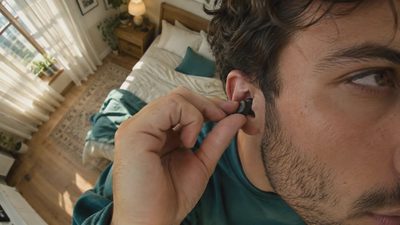
I start with fit because excellent sound is useless if the buds keep working loose. I use the supplied ear tips, then walk for 30 minutes, climb stairs, and wear the pair while doing household chores. For sport-oriented wireless earbuds, I add a short bike ride and a sweaty indoor workout. A secure fit should not require constant pressure, and the tips should not leave my ears sore after two hours.
Next comes sound. I listen to spoken podcasts, acoustic tracks, dense rock mixes, and bass-heavy electronic music. I am not trying to crown a winner based on a graph. I want to know whether speech sounds natural, whether cymbals become sharp, and whether bass stays controlled at low volume. The best wireless earbuds make it easy to hear detail without forcing you to turn them up.
I also test controls with cold, damp fingers and with my phone in a pocket. Touch controls that trigger accidentally are frustrating, while physical buttons can be easier to use during a run. I record the number of false presses, test each gesture twice, and note whether the companion app lets me change the controls. That is more useful than a long list of unsupported features.

Battery life, charging, and connection reliability
Battery claims deserve careful reading. When a box says eight hours, that figure often excludes active noise cancellation, high volume, or phone calls. I play a repeating playlist at a comfortable real-world volume, enable the features I would actually use, and record when the first bud shuts down. Then I test the case after two full recharges.
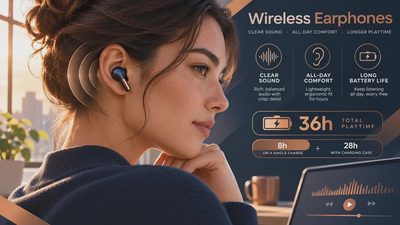
In my experience, a pair rated for eight hours might deliver closer to six or seven with noise cancellation enabled. That is not automatically a problem. Six hours covers a workday commute and a gym session, while a case providing another 20 to 30 hours can make the total package convenient. The important question is whether the right bud and left bud drain evenly. A difference of several percentage points after ordinary use is normal; a large gap can become annoying over time.
Connection stability gets tested with an iPhone, a Windows laptop, and an Android phone when available. I move between rooms, place the phone in a back pocket, and switch between music and a call. Good wireless earbuds reconnect quickly after opening the case and do not produce repeated dropouts near a crowded Wi-Fi router. Multipoint, which allows two devices to stay connected, is helpful for laptop users but should not be treated as essential if it creates more glitches than it solves.
Noise cancellation and call quality in ordinary places
Active noise cancellation uses microphones and electronic processing to reduce outside sound. It works best against steady noise such as an airplane engine, air conditioner, or freeway rumble. It is less impressive with sudden voices, clattering dishes, or a child asking a question from across the room. I test it with a fan, a running vacuum at a safe distance, and outdoor traffic, then compare the result with passive isolation from the ear tips.
The strongest wireless earbuds do not simply make everything quieter. They preserve a relaxed sound while reducing low-frequency noise, and their transparency mode lets outside sound through without making voices sound robotic. Transparency mode is the setting that uses the microphones to imitate an open ear. I use it while walking and speaking with my family because safety and awareness matter more than maximum silence.
For calls, I record samples indoors, outdoors, and beside moderate traffic. I listen for clipped syllables, wind distortion, and the strange underwater effect that some microphones produce. A pair can sound fantastic for music and still be poor for calls. If you regularly join meetings, microphone quality deserves equal weight with bass response and battery life.

Comfort, durability, and the family test
Comfort changes after the honeymoon period. During a 30-day test, I wear a pair for at least two hours on several days, sleep briefly with them if their shape allows it, and check for pressure points. Stem-style designs often provide better microphone placement, while compact rounded designs can be easier to fit under a helmet. Neither shape wins for everyone; ear anatomy is the deciding factor.
Durability testing does not mean deliberately destroying expensive electronics. I inspect the hinge, magnets, charging contacts, and mesh after repeated pocket use. I also simulate ordinary mishaps: a case slipping from a desk onto a hard floor, a bud falling onto a rug, and exposure to light sweat. Water resistance ratings are not waterproof guarantees. An IPX4 rating generally covers splashing water, not submersion or a washing machine.
The family test exposes problems quickly. A case that is hard to open with one hand, buds that are difficult to tell apart, or a pairing process that requires three resets becomes a daily nuisance. I also look at replacement availability. Losing one bud is less painful when the manufacturer offers a replacement instead of forcing you to buy a complete new set.
Which wireless earbuds should you buy?
At the budget end, models from Anker Soundcore and JLab often provide useful sound and respectable battery life for roughly $40 to $100. They can be excellent starter choices, but app polish, microphone performance, and long-term firmware support vary. I would choose a dependable fit and reliable controls over a flashy equalizer with ten presets.
The $150 to $250 range is where most shoppers should begin. Apple AirPods Pro are convenient for people already using Apple devices, while Google Pixel Buds and Samsung Galaxy Buds make more sense inside their respective phone ecosystems. Bose and Sony typically emphasize noise cancellation and polished sound, though their premium pricing is not automatically justified for every listener.
The right wireless earbuds are the ones that match your routine. A frequent traveler should prioritize noise reduction and comfort. A runner needs a secure fit and sweat resistance. A remote worker should focus on microphone quality, multipoint behavior, and easy muting. Someone who constantly misplaces small devices should avoid paying $300 simply for a feature they will not use.
My practical buying checklist
Before ordering, check the return window and wear the pair long enough to find pressure points. Confirm whether the box includes several tip sizes, whether the app supports your phone, and whether a replacement bud can be purchased. Read the water-resistance rating carefully rather than accepting the word “sport” as protection.
Then test four things during the first week: a long podcast, a phone call outside, a workout, and a device switch. Note battery drain with your preferred features enabled. If the connection drops repeatedly or the fit fails during normal movement, return the pair while you can. No specification can rescue wireless earbuds that are uncomfortable every afternoon.
Spec sheets are free. Truth takes a few weeks. That is why my reviews focus on what survives ordinary use, not what looks impressive for five minutes on a showroom counter.
No letters yet — be the first to write.