
Are wireless earphones good enough to replace wired headphones, or are they another gadget that looks impressive for a week and becomes annoying by month three? After testing dozens of pairs with phones, tablets, laptops, gym equipment, and family noise in the background, my answer is yes, wireless earphones good enough for most people now exist. The catch is choosing a model that handles your actual routine rather than trusting a dramatic launch video.
I spent eight years testing consumer electronics in a corporate quality lab, and I still use a simple rule: convenience matters only when it survives repeated use. I tested these earphones during Reno commutes, phone calls, mountain-bike preparation, grocery runs, and several evenings when my kids were loudly negotiating bedtime. Spec sheets are free. Truth takes a few weeks.
What Makes Wireless Earphones Good in Daily Use
The biggest advantage is not audio quality. It is the disappearance of small annoyances. There is no cable catching on a jacket zipper, pulling one earbud loose, or tangling inside a pocket. A reliable charging case also means you can top up during a lunch break instead of hunting for a wall outlet.
During my testing, I judged a pair on five practical points: connection stability, comfort after two hours, microphone performance, battery consistency, and how quickly the case restored a usable charge. Wireless earphones good for daily use should connect automatically when the lid opens and reconnect without making you open a settings menu every morning.
That reliability separates a $40 bargain from a $180 model. Budget pairs such as the Anker Soundcore P20i can sound surprisingly lively for around $30, but premium options usually offer better touch controls, stronger microphones, and more predictable software. The expensive pair is not automatically better; it simply has more ways to get the details right.
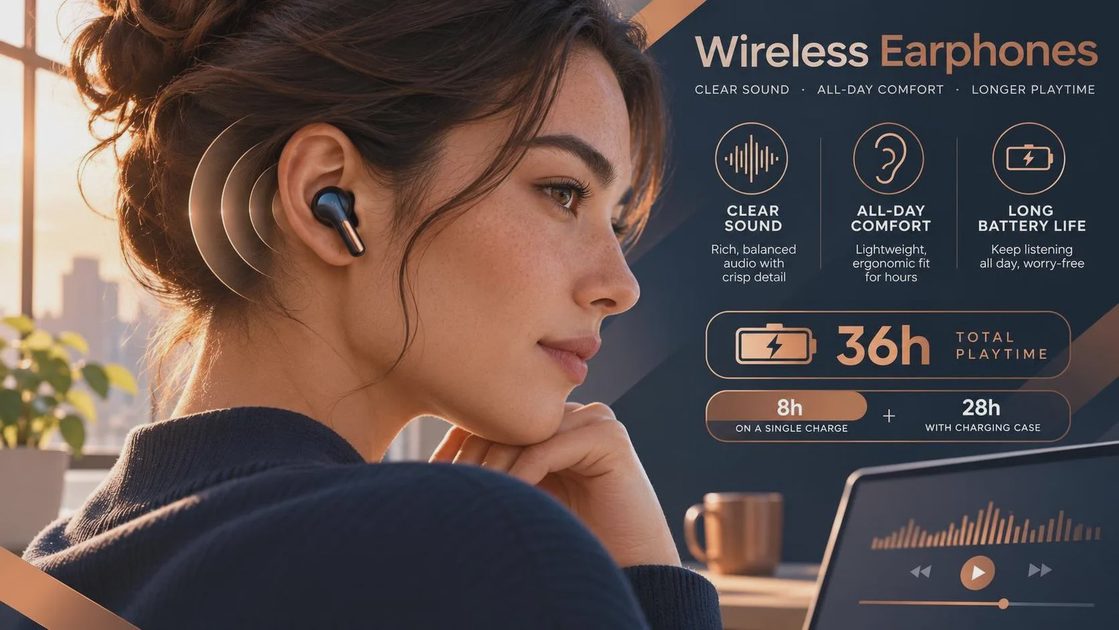
Sound Quality: More Than Bass and Volume
Manufacturers often advertise oversized drivers, high-resolution codecs, and studio-inspired tuning. Those specifications can be useful, but they do not tell you whether vocals sound natural or whether cymbals become tiring after an hour. I listen to the same playlist across every test pair, including spoken podcasts, acoustic tracks, dense rock, and electronic music with deep bass.
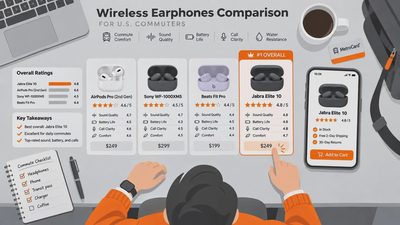
The best wireless earphones good for mixed listening keep voices centered and clear without making bass disappear. Apple AirPods Pro 2 remain strong for iPhone owners because speech is crisp, transparency mode sounds natural, and the tonal balance avoids the muddy effect found on many cheaper buds. Sony WF-1000XM5 models offer more control over sound and excellent noise reduction, but their shape will not suit every ear.
Noise cancellation is another area where advertising gets slippery. Active noise cancellation uses microphones and signal processing to reduce outside sound, especially steady noise such as airplane engines or air conditioners. It is less effective against sudden voices, barking dogs, and a child asking the same question six times. A good seal from the ear tip often matters as much as the electronics.
Fit, Comfort, and Workout Reality
A pair can have wonderful sound and still be a bad purchase if it slowly works loose. Ear shapes differ enough that I do not treat one reviewer’s comfort claim as universal. I test each model with the included tip sizes, walk briskly, bend forward, and wear the buds for at least two hours. That exposes pressure points that disappear during a ten-minute demo.
For workouts, wireless earphones good enough for running should resist sweat and stay stable without being painfully tight. Look for an ingress protection rating, which describes resistance to dust or water. An IPX4 rating generally indicates splash resistance, while higher ratings provide more protection. These ratings do not mean a charging case belongs in a shower or that a submerged earbud will survive.
The Beats Fit Pro still make sense for active users who want a secure wingtip design, while the Jabra Elite 8 Active line has been built around workout durability. For casual walking, regular AirPods or Galaxy Buds may be more comfortable. Fit is personal, so a retailer with a reasonable return policy is worth more than a flashy frequency chart.
Battery Life and the Annoying Fine Print
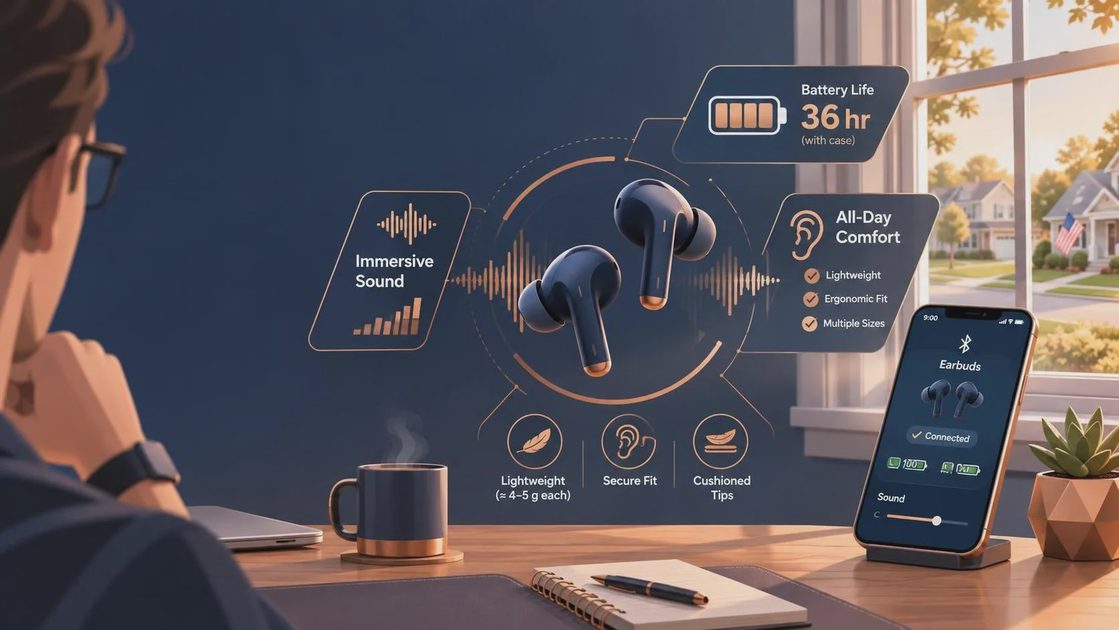
Battery claims usually describe playback with noise cancellation turned off, moderate volume, and a fresh battery. Real use is harsher. I measure continuous playback at a comfortable volume, repeat the test with noise cancellation enabled, and check how much charge remains after several days in a case. A pair rated for eight hours may deliver closer to five or six with extra features active.
Wireless earphones good for travel should provide at least four reliable hours per charge and several additional charges from the case. That covers a flight segment, work sessions, or a long walk without anxiety. USB-C charging is now common, and quick-charge features are genuinely useful: ten minutes in the case can often provide enough playback for a commute.
Battery aging is harder to see in a first-week review. After months of charging, capacity gradually declines. I would rather buy a model with a strong warranty and a replaceable or reasonably priced case than chase an extra hour advertised under perfect conditions.
Calls, Controls, and Phone Compatibility
Microphone quality matters more than many audio reviews admit. I make calls indoors, beside a busy street, and with wind from a small fan aimed toward the microphones. Cheap earbuds often sound acceptable in a quiet room but transmit hollow speech once traffic or wind enters the recording.
Apple’s AirPods work especially smoothly across Apple devices, while Samsung’s Galaxy Buds offer their best feature integration with Galaxy phones. Google Pixel Buds are a sensible Android choice, but every brand can pair with multiple platforms through standard Bluetooth. Wireless earphones good for a mixed-device household should not lock basic controls behind one phone brand.
Also test the controls with cold or wet fingers. Tap commands can misfire, and swipe gestures are difficult when wearing gloves. Physical buttons usually provide clearer feedback, even if they push the earbud deeper into the canal. That small design choice can determine whether you enjoy the product every day.
Which Price Range Makes Sense?
Under $50, focus on stable pairing, comfort, and return support. Anker, JLab, and Soundcore frequently offer capable options in this range. Expect compromises in transparency mode, app polish, and call quality, but not necessarily terrible sound.
From $80 to $180, you get the strongest balance for most buyers. This is where wireless earphones good for commuting, calls, workouts, and casual listening usually live. Apple, Samsung, Sony, Bose, Beats, and Jabra all have models worth comparing, but the right choice depends heavily on your phone and ear shape.
Above $200, you are paying for refinement: better noise cancellation, richer controls, premium materials, and improved switching between devices. That can be worthwhile for frequent travelers, but it is not a guarantee of comfort or durability. I would take a well-fitting $100 pair over an expensive model that needs constant adjustment.
My Buying Checklist After Thirty Days
Before purchasing, confirm which phones and computers you use, then check whether the manufacturer’s app supports all of them. Read the water-resistance details, not just the marketing headline. Verify the return window, because fit cannot be predicted from photographs. Search for long-term reports about battery swelling, cracked hinges, or connection problems rather than relying only on launch-week scores.
Wireless earphones good for your life should disappear into your routine: they should connect quickly, stay comfortable, survive ordinary movement, and make voices understandable. If you mainly listen at a desk, spend less and prioritize comfort. If you fly weekly, pay for effective noise cancellation and a dependable case. If calls dominate your day, test microphone samples before buying.
My bottom line is straightforward. Wireless earphones are now good, but not because every new pair deserves a trophy. The winners are the models that remain comfortable, predictable, and useful after the novelty fades. I tested it. Here’s what actually happened: buy for fit and daily reliability first, then spend extra only where your routine will notice the difference.

No letters yet — be the first to write.