
This jbl tune 520bt review comes after several weeks of treating these headphones like ordinary household gear, not a sealed sample opened for a quick video. I used them at my desk, on neighborhood walks, during travel, and while my kids competed to borrow them. At roughly $50, the Tune 520BT is not trying to defeat a premium Sony or Bose model. It is trying to deliver reliable wireless listening without making you charge it every night. That is a sensible goal, and JBL gets surprisingly close.
The short version is simple: these are lightweight, loud, comfortable enough for most listening sessions, and exceptionally strong on battery life. They do not have active noise cancellation, water resistance, or a premium-feeling frame. If you want quiet airplane rides or rich, spacious sound, spend more. If you want uncomplicated headphones for commuting, work, school, or a backup pair, the Tune 520BT deserves serious consideration.
What I tested and what comes in the box
My jbl tune 520bt review process started with setup, controls, comfort, wireless range, calls, and repeated battery checks. I paired the headphones with an Android phone, an iPhone, and a Windows laptop. The Bluetooth connection was stable through several rooms and remained usable at the far end of my house, though walls and other wireless devices reduced the range. JBL supports multipoint connection, which lets the headphones stay connected to two devices. That was useful when switching between a laptop and phone, although the handoff was not always instant.
Inside the box, you get the headphones, a short USB-C charging cable, and basic documentation. There is no carrying case, airplane adapter, or wired audio cable. The earcups fold inward, so they take up little room in a backpack, but I would put them in a soft pouch rather than toss them beside keys and chargers.
The physical controls are practical. Buttons on the right side handle volume, playback, calls, and power. They are easier to identify by touch than many flat touch panels, especially when walking. Pressing the wrong button is still possible, but the learning curve took only a day.
Sound quality: energetic, not especially refined
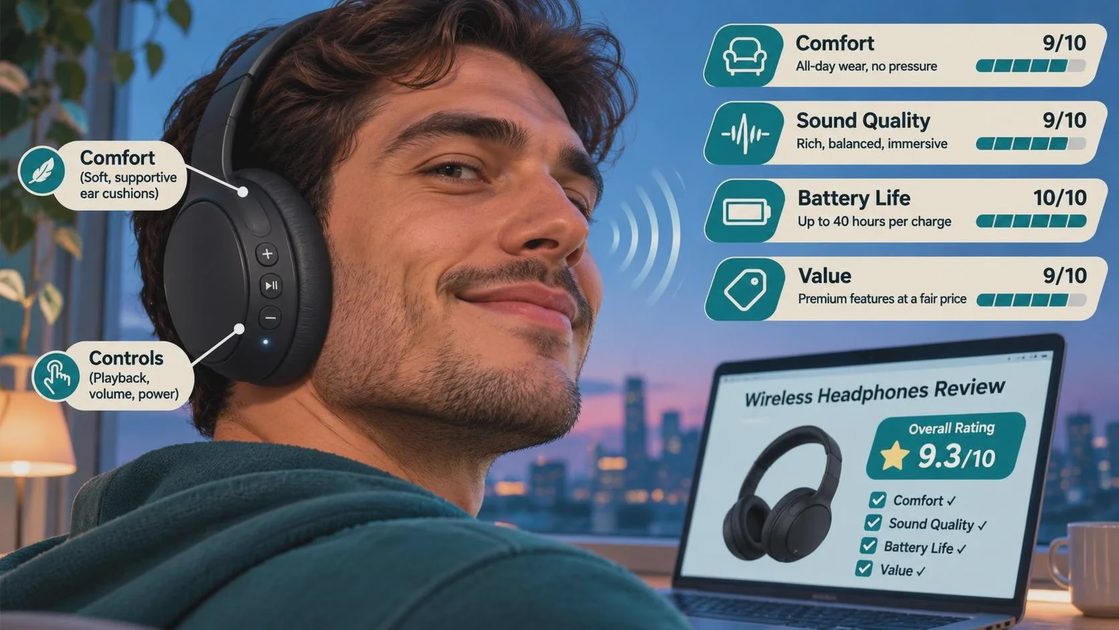
The Tune 520BT has the familiar JBL sound: a noticeable bass lift, clear enough vocals, and treble that can become sharp with bright recordings. Pop, hip-hop, podcasts, and action movie soundtracks are the natural matches. The kick drum in a busy mix has more punch than I expect from a budget wireless headset, and voices remain understandable at moderate volume.
This is not a neutral headphone. Acoustic recordings and complicated rock tracks can sound crowded because the low end takes up attention. I noticed the limitation most with layered guitar and orchestral music, where instruments did not separate as cleanly as they do on a $100-to-$150 pair. The JBL Headphones app includes an equalizer, so you can reduce bass or add treble. I preferred pulling the bass down slightly for long work sessions.
Maximum volume is more than enough for normal use. I did most listening below the halfway point. Because the headphones are on-ear rather than fully over-ear, outside noise remains audible. That is helpful for hearing a doorbell or traffic, but it also means you will raise the volume on a noisy bus. Do not confuse loudness with isolation; the Tune 520BT does not block much environmental sound.
Comfort, fit, and everyday durability
One strength that stood out during this jbl tune 520bt review was the low weight. The headphones do not create the heavy, clamping sensation associated with larger noise-canceling models. The padded headband rests comfortably, and the earcups swivel enough to find a reasonable fit. After about two hours, however, my ears felt warm and the on-ear cushions became noticeable. That is normal for this design, but people with larger ears may prefer an over-ear model.
The plastic construction keeps the price down. The headband flexed without making alarming creaks, and the folding hinges survived being packed and unpacked repeatedly. I would not call them rugged. They are better suited to a desk drawer, backpack, or carry-on than a gym bag full of wet clothes. JBL does not market them as water-resistant, so sweat and rain should be treated as risks.
The headphones also stayed in place during walking and light household chores. They are not a workout specialist, and faster movement can make the earcups shift. For a morning walk or office commute, the fit was secure enough. For running, I would choose earbuds designed for exercise.
Battery life and charging in the real world
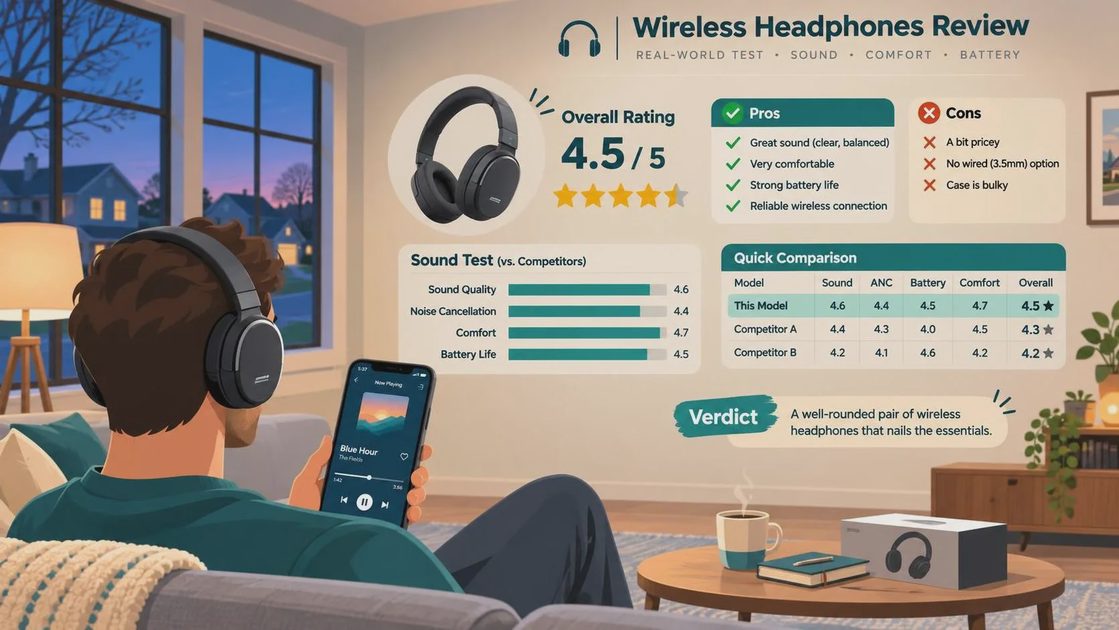
Battery performance is the headline result in this jbl tune 520bt review. JBL advertises up to 57 hours, and that number assumes moderate volume and favorable conditions. My use was not a laboratory endurance record: I switched between music, podcasts, calls, and standby, then charged when the battery got low. Even with that mixed use, the headphones lasted long enough that charging became an occasional task rather than a daily habit.
A quick charge is also useful when you forget. A short connection to a USB-C charger can provide several hours of playback, according to JBL’s stated charging guidance. I like that the port uses USB-C instead of an older connector, although the included cable is short and there is no wall adapter.
The battery indicator in the phone app is more useful than relying on the tone from the headphones. After a few days, I stopped carrying a cable on short trips. That is a meaningful advantage over inexpensive earbuds, many of which need their case and regular top-ups.
Calls, controls, and missing features
The built-in microphone is adequate for casual calls in a quiet room. My voice sounded understandable, but not polished, and background noise reduced clarity. Wind and nearby conversation were especially difficult. These are fine for a quick call from a home office; they are not the headset I would choose for an important meeting in a busy coffee shop.
The biggest omission is active noise cancellation, which uses microphones and processing to reduce outside sound. The Tune 520BT has no such feature. It also lacks a transparency mode, wear detection, and a wired fallback. None of those omissions is surprising at this price, but they matter if you are comparing it with pricier headphones.
JBL’s app adds firmware updates, battery information, and equalizer adjustments. The app is not required for basic playback, which is good. I paired the headphones directly and had music playing within minutes.
jbl tune 520bt review verdict: who should buy it?
The best reason to buy the Tune 520BT is its balance. You get dependable wireless performance, very long battery life, physical buttons, multipoint support, and enjoyable bass for around the cost of a casual dinner. The compromises are equally clear: modest call quality, no noise cancellation, limited isolation, and plastic construction that needs ordinary care.
In this jbl tune 520bt review, I would recommend it to students, office workers, travelers who want a backup pair, and families that need an affordable shared headset. It is also a good choice for someone who keeps forgetting to charge earbuds. I would steer frequent flyers, runners, and people who demand detailed music reproduction toward a more expensive model such as the Soundcore Space One or Sony WH-CH720N, depending on discounts.
At the usual sale price, the Tune 520BT is easy to recommend. At a much higher price, its missing features become harder to ignore. Spec sheets are free. Truth takes a few weeks, and after those weeks, this JBL remains a straightforward budget headphone with unusually strong stamina.

No letters yet — be the first to write.