The Expensive Watch I Stopped Reaching For
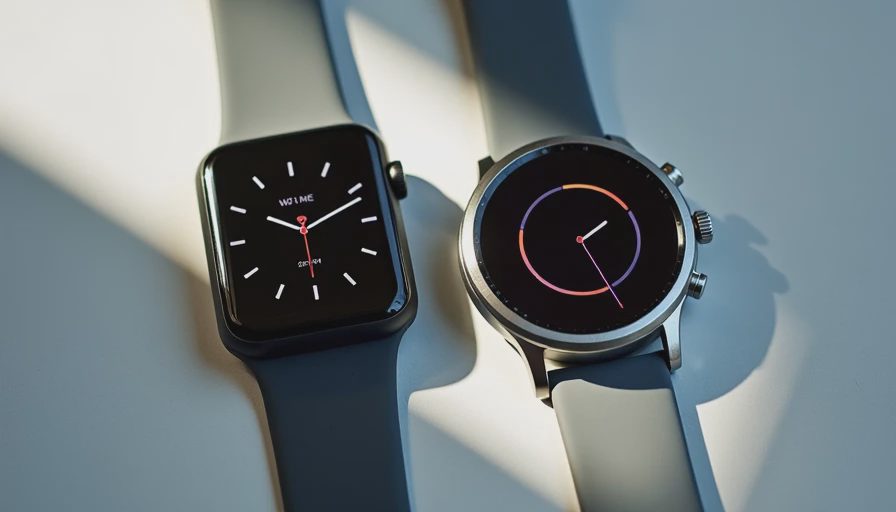
I wore an $800 smartwatch and a $150 fitness-focused watch at the same time for several weeks of real training—runs, hikes, strength sessions, and ordinary daily movement. The expensive watch had the prettier maps, the fancier recovery scores, and the more polished app. The $150 watch simply got the core numbers right more consistently and asked less of me in return.
That is the quiet story most launch coverage misses. Flagship watches win the spec sheet and the first-week demo. Budget fitness trackers often win the only test that counts: which device still influences your training after the novelty wears off.
Spec sheets are free. Truth takes a few weeks of actual sweat.
What the $150 Watch Got Right
Heart Rate Consistency During Real Efforts
Both devices were reasonably accurate at rest. Once the work started—tempo runs, hill repeats, circuit training—the budget watch’s optical sensor stayed more stable. The flagship occasionally spiked or dropped during abrupt intensity changes, a behavior I have seen on multiple premium wrists. For zone-based training the cheaper watch produced cleaner data more often.
Battery Life That Matches Real Use
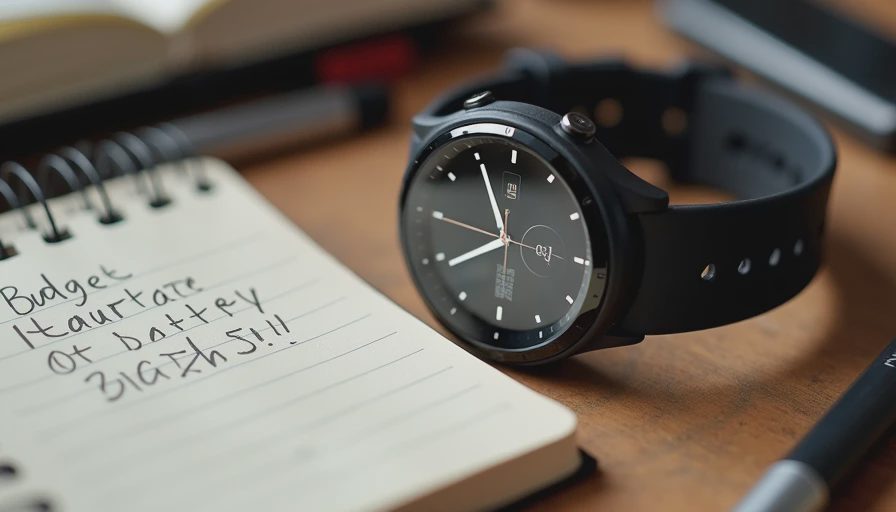
The $800 watch needed charging almost every day once continuous heart-rate, GPS, and sleep tracking were enabled. The $150 watch routinely lasted five to seven days with similar features active. That difference changes behavior. I stopped disabling features to stretch battery on the expensive watch. I never thought about it on the budget one.
Simple Metrics That Actually Change Behavior
The flagship offered a long list of recovery, readiness, and body-composition estimates. Many of them looked insightful and then proved noisy or contradictory night to night. The $150 watch stuck to clearer signals: heart-rate zones, active minutes, a basic sleep score, and straightforward activity totals. Those numbers were easier to trust and easier to act on.
Where the Flagship Still Won
The expensive watch has better GPS track detail, more attractive maps, deeper third-party app support, and a nicer screen in direct sun. Notifications are more capable. If you want a full smartwatch that also does fitness, it remains the more complete device. The gap is real—it is just narrower than the price difference suggests for pure training use.
The Friction That Tips Daily Use
After several weeks the deciding factors were not peak accuracy charts. They were the small daily costs:
Charging frequency
Band comfort during longer efforts
How often I had to correct or second-guess the data
Whether I felt like wearing the device on rest days
The $150 watch won most of those quiet contests. It stayed on the wrist. The flagship started spending more nights on the charger.
Who Should Still Buy the Expensive Watch
If you want advanced mapping, richer smart features, longer software support, or the most polished ecosystem, the flagship still makes sense. Those are legitimate needs. They are not the same as “I want reliable training data without babysitting the device.”
For people whose primary goal is consistent heart-rate zones, activity tracking, and basic sleep trends, the budget option has become uncomfortably competitive.
The Practical Takeaway
Stop assuming higher price equals better training data. Test the metrics you actually use. Pay attention to battery life and comfort, because those decide whether the data keeps arriving. In this side-by-side stretch the $150 watch delivered cleaner day-to-day usefulness for fitness than the $800 alternative.
I will keep both in the rotation for longer observation. Right now the cheaper watch is the one I put on without thinking. That is usually the signal that matters most.
No letters yet — be the first to write.