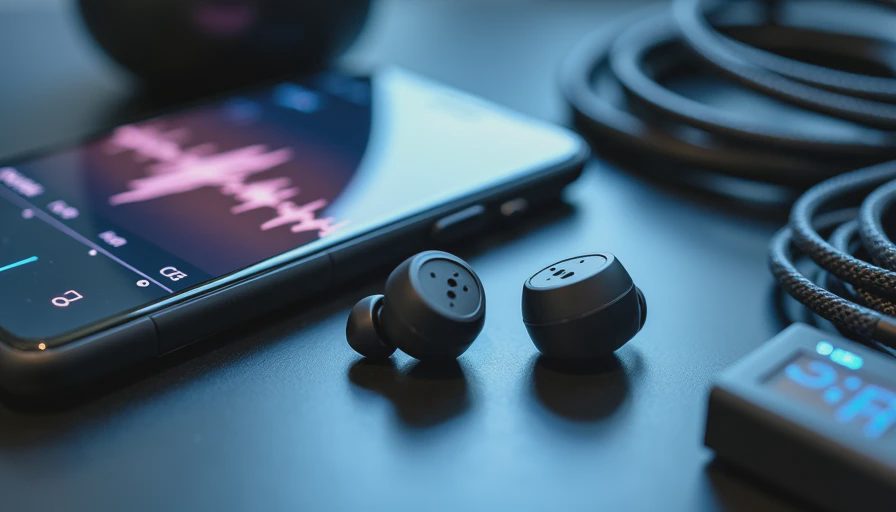
The Millisecond That Lies to Your Brain
Bluetooth latency is one of those specs that feels scientific. A manufacturer says “40 ms low-latency mode” or “under 80 ms with AAC,” and the number gets repeated in every roundup. The problem is that the number on the slide deck and the delay you actually experience in your ears are frequently different animals.
I spent years in a QA lab measuring audio delay the unglamorous way: camera on the screen, microphone on the earbud, frame-by-frame comparison. The gap between the published figure and the real-world result could be 30–60 ms once you left the perfect test conditions. That is enough to turn a drum hit into a soft echo or make a video feel slightly unmoored from its soundtrack.
Spec sheets are free. Truth takes a few weeks—and a second device recording the gap.
What Latency Actually Is
Latency is the time between the moment the source device sends an audio packet and the moment the sound reaches your eardrum. In a wired headset it is tiny. Over Bluetooth it becomes a chain of encoding, transmission, decoding, buffering, and sometimes extra processing for ANC or spatial audio.
The number you see in marketing is usually measured under ideal conditions: a specific codec, a quiet RF environment, no other Bluetooth devices nearby, and often a special “low-latency” mode that may disable other features. Change any of those variables and the number moves.
How I Measure It on the Workbench
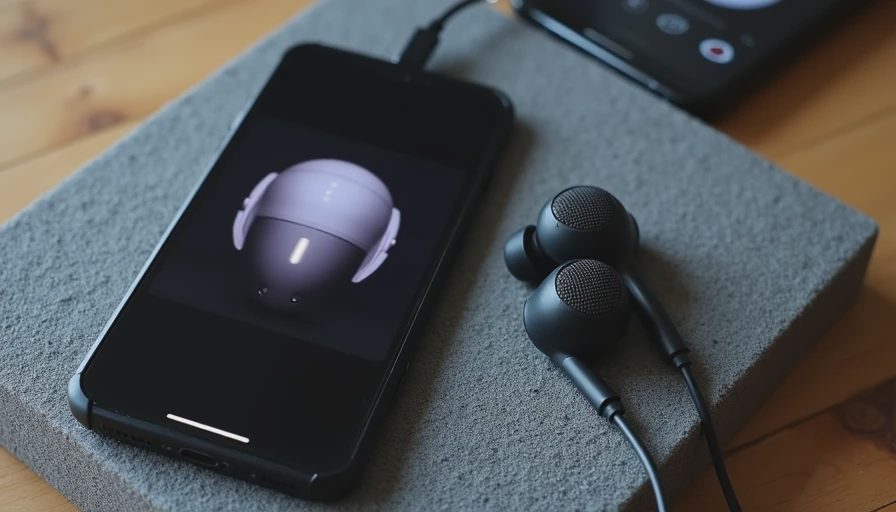
My current method is deliberately simple and repeatable:
Play a short video clip that contains a sharp, isolated sound (a clap, a snare hit, or a metronome click).
Record the phone or tablet screen and the earbud output at the same time with a second device.
Line up the visual event and the audio waveform in an editor and measure the offset in milliseconds.
Repeat with the same clip under three conditions: quiet desk, typical living-room Bluetooth congestion, and while the earbuds are also handling microphone input for a call.
Log the codec in use and whether any “gaming” or “low-latency” mode was enabled.
Three runs minimum. I report the range, not a single heroic number. A device that stays between 45–70 ms across conditions is meaningfully better than one that advertises 40 ms but jumps to 130 ms the moment another Bluetooth device is active.
Codecs, Modes, and the Fine Print
Not all codecs behave the same. SBC is the baseline and usually the slowest. AAC is common on Apple devices and can be decent. aptX, aptX Adaptive, LDAC, and the various vendor-specific low-latency modes can look excellent on paper—until you notice that the lowest-latency setting often turns off high-resolution audio, weakens ANC, or only works with the manufacturer’s own source device.
I have tested earbuds that dropped below 50 ms in their special gaming mode and then ballooned past 150 ms the moment I switched back to normal music mode or took a call. The marketing number was technically true. It was also incomplete.
Where Latency Actually Bothers People
For pure music listening, most people never notice anything under about 100–120 ms. The brain is forgiving when there is no external visual reference. The problems appear in three places:
Watching video: dialogue that lags behind lips becomes distracting fast.
Mobile gaming: the delay between tapping the screen and hearing the action breaks immersion.
Video calls: your own voice returning late through the earbuds creates the classic “I sound like I’m underwater” feeling.
If a product is marketed for any of those uses, the latency number stops being trivia and becomes a daily quality-of-life issue.
What I Now Write in Reviews
Instead of copying the manufacturer’s best-case figure, I report:
Measured latency range with the most common codec
What happens when low-latency mode is enabled (and what features disappear)
Whether the delay stays stable when the microphone is active
A plain-language verdict: fine for music, noticeable on video, or problematic for calls and games
That set of observations tells a reader far more than a single millisecond claim.
The Pattern Again
Bluetooth latency is another example of a metric optimized for the press cycle rather than real life. The cleanest number is the one measured in the quietest lab with the most favorable settings. The useful number is the one you get when the earbuds are doing everything you actually ask of them.
I will keep recording the gap on every pair that lands on the bench. The milliseconds that survive real conditions are the ones that belong in a review.
Next up: how I actually test ANC—five everyday noise environments that no anechoic chamber ever bothers to simulate.



No letters yet — be the first to write.