The Quiet Room That Lies
Almost every ANC review still leans on the same pretty graph: a frequency-response curve measured in an anechoic chamber or a high-end test fixture. The line drops dramatically in the low end, the manufacturer declares “industry-leading noise cancellation,” and the internet moves on.
I used to help generate those curves. They are useful for engineering. They are incomplete for deciding whether a pair of earbuds will make a crying toddler, a airplane cabin, or an open-plan office less miserable. Real noise is messy, directional, and full of the mid-range frequencies that many ANC systems handle poorly. So I stopped treating the lab graph as the final word and built a set of five everyday scenarios that any reader can picture—and that any reviewer can roughly reproduce.
Spec sheets are free. Truth takes a few weeks and a willingness to leave the quiet room.
The Five Scenarios I Run on Every Pair
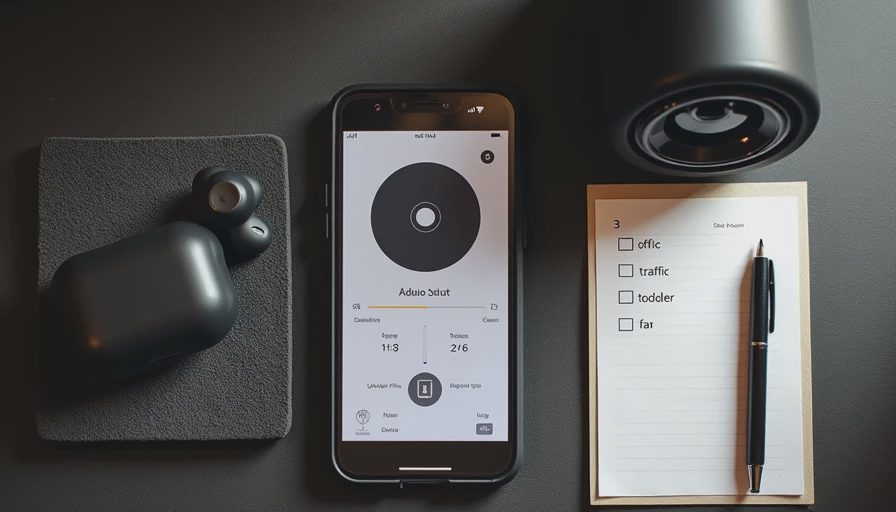
These are not scientific in the ISO-standard sense. They are consistent, repeatable, and deliberately chosen because they match the complaints I used to hear from real users and the failures I used to see in the lab.
1. Airplane Cabin (The Classic Low-Frequency Test)
I play a looped recording of cabin noise at a fixed volume through the same reference speaker, seated in the same chair. Good ANC should turn the constant roar into a dull background. Mediocre ANC leaves a noticeable rumble that still fatigues you after an hour. I also note whether the earbuds start to hiss or pump when the pressure simulation changes slightly.
2. Open Office / Coffee Shop Chatter
This is the mid-range killer. Overlapping voices, clattering keyboards, and the general wash of human noise sit right where many ANC systems are weakest. I score how much of a nearby conversation remains intelligible and whether the earbuds make the space feel calmer or just slightly muffled.
3. City Sidewalk and Traffic
Mixed low and mid frequencies plus sudden transients (car horns, bus air brakes). The test reveals whether the ANC can react quickly without creating that weird suction or “underwater” feeling when the noise level changes.
4. Home with Kids (The Toddler Track)
A short, looping recording of a child crying and playing at realistic volume. This one is unforgiving. A lot of “premium” ANC that looks excellent on a jet-engine curve barely touches the sharp, mid-forward energy of a real child’s voice. Parents notice immediately. So do I.
5. Fan / HVAC and General Room Tone
Steady mid-low noise that many people live with all day. The best performers make the room feel quieter without making your own voice sound booming when you speak. The worst ones create an oppressive sealed-in sensation that becomes tiring faster than the original noise.
I run each scenario with the same volume reference, the same fit check, and both ANC on and ANC off so the difference is clear. I also test transparency mode in the office and sidewalk scenarios because many people live in that mode more than full ANC.
What the Lab Graph Misses
Chamber measurements are usually done with a perfect seal on a standardized dummy head. Real ears vary. Fit changes the effective isolation dramatically, and passive isolation is often half the battle. A mediocre ANC system with excellent passive seal can outperform a fancy hybrid system that leaks around the tips.
The graphs also tend to emphasize the deep bass attenuation that looks dramatic on paper. Human annoyance is often driven more by the 500 Hz–2 kHz range—exactly where voices and many everyday noises live. When I score the five scenarios I pay special attention to that band.
How I Report the Results
In every review you will see a short, plain-language summary for each of the five environments instead of a single “excellent ANC” adjective. I note:
How much the noise level drops subjectively
Whether voices remain intelligible
Any unpleasant side effects (pressure, hiss, pumping)
How transparency mode behaves in the same conditions
That set of observations is far more useful than a smoothed curve that never leaves the lab.
Why This Method Stays on the Site
I am not trying to replace proper acoustic engineering. I am trying to answer the question a reader actually has: will these earbuds make my specific noisy life better? The five scenarios are the closest I have found to that answer without needing a quarter-million-dollar chamber.
Every pair of earbuds or headphones that comes through the workbench gets the same five tracks, the same chair, and the same scoring notes. The ones that survive all five without major weaknesses are the ones I can recommend without hedging.
Next time we leave the pure methodology posts behind and start the long-term device takes. The first 30-day review is already wearing in.




No letters yet — be the first to write.