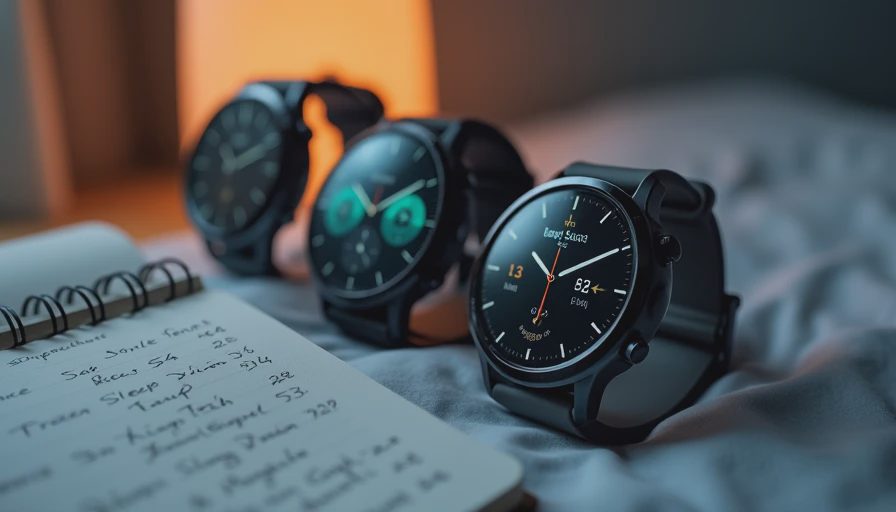
The Ridiculous but Necessary Experiment
Sleep tracking is one of the most marketed features on modern smartwatches and one of the least trustworthy. Every brand shows beautiful staged graphs. Very few publish the messy reality of nights that include getting up with kids, restless tossing, or simply reading in bed with the lights dimmed.
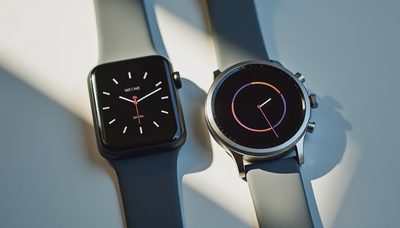
So I ran the unglamorous test: three watches on the wrist (and one on the other) for fourteen consecutive nights. Same person, same bed, same household chaos. The goal was not laboratory precision. It was consistency and usefulness—does the watch roughly agree with how the night actually felt, and does it stay consistent across similar nights?
Spec sheets are free. Truth takes a few weeks of actually sleeping in the things.
The Setup
I chose three current watches that all claim advanced sleep staging and recovery insights. Each was set to its most accurate continuous-monitoring mode. I logged subjective notes every morning: time to fall asleep, number of times I got up, overall rest quality, and any obvious interruptions. Then I compared the three sets of graphs against those notes and against each other.
Fourteen nights is not a clinical trial. It is long enough for patterns to appear and for the “first-night effect” of wearing unfamiliar devices to fade.
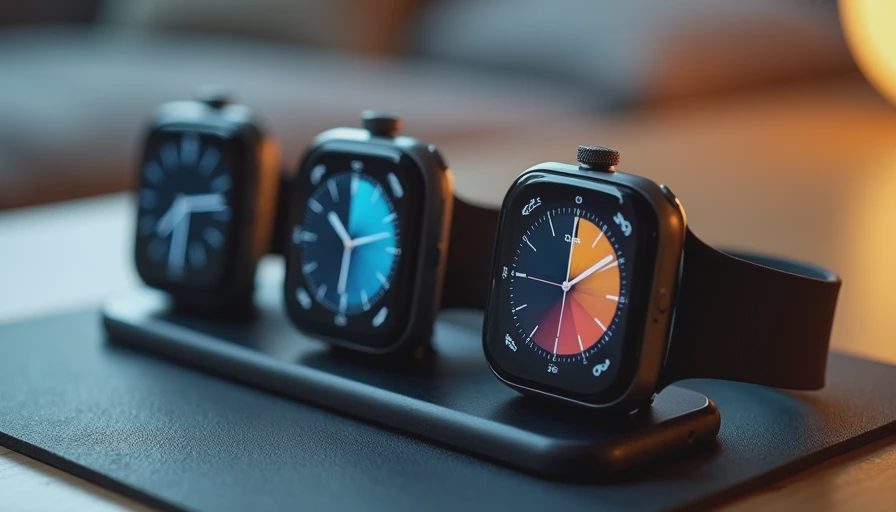
What the Watches Agreed On
All three correctly detected the major difference between short, broken nights and longer, quieter ones. Total sleep time was usually within 20–30 minutes of my manual estimate. That broad accuracy is useful. If you only want to know whether you are chronically short on sleep, any of these watches will give you a serviceable signal.
Where They Diverged Sharply
Deep sleep and REM staging were all over the place. On several nights one watch would report nearly twice as much deep sleep as another. Restless periods were scored inconsistently—sometimes a twenty-minute stretch of clearly being awake was marked as light sleep by one device and awake by another.
One watch was systematically optimistic about sleep quality. Another was more conservative and closer to how the nights actually felt. The third produced the prettiest graphs and the least reliable night-to-night consistency.
The Practical Problems Nobody Advertises
Wearing three watches is uncomfortable. More importantly, it revealed daily friction that matters for real users:
Two of the watches required nightly charging after enabling full sleep tracking and continuous heart-rate. The third could stretch closer to a day and a half but still needed frequent top-ups.
Band comfort became a real issue. One band left marks; another loosened during the night and affected contact.
Morning insights ranged from genuinely useful recovery suggestions to generic advice that ignored the fact that I had been up with a child at 2 a.m.
The watch that produced the most cautious, consistent data was also the one whose band I noticed least and whose battery demand was most manageable. That combination mattered more than the fanciest sleep-stage visualization.
What I Now Tell People Who Want Sleep Tracking
If you want broad trends and a daily reminder to protect your sleep window, most current smartwatches are good enough. If you want precise staging to make detailed recovery decisions, treat the numbers as rough estimates rather than medical data. Consistency across nights is more valuable than a single impressive graph.
The most useful device is the one you will actually wear every night without irritation or battery anxiety. In this two-week test that was not the most expensive watch or the one with the most colorful sleep report.
The Quiet Conclusion
Sleep tracking has improved. It has not become magic. The gap between marketing screenshots and night-to-night reliability is still wide. Wearing three watches at once is a stupid-looking way to prove it, but it works.
I will keep one of the three in the rotation for longer-term observation and retire the other two. The winner was not the one that looked best on day one. It was the one that bothered me least on night fourteen while still giving me data I could roughly trust.
That is still the bar that matters.
No letters yet — be the first to write.