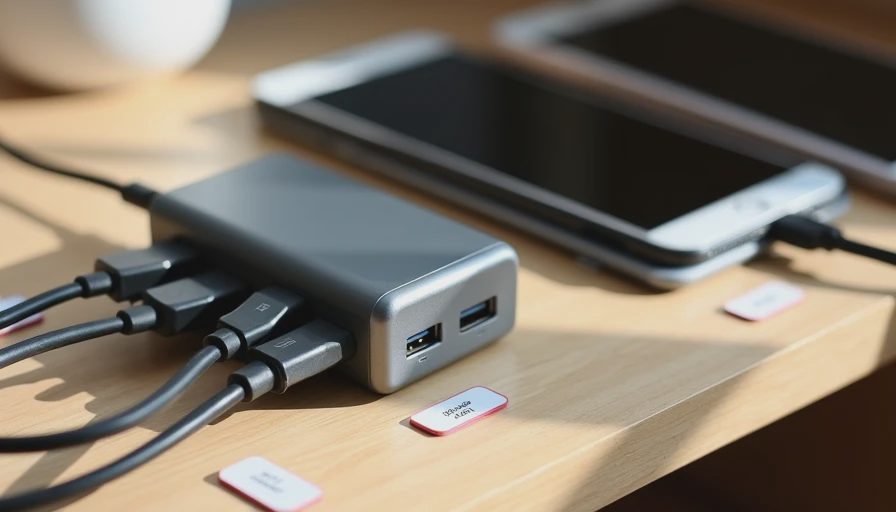
The Daily Argument We Got Tired Of
Every household with kids eventually develops the same low-grade conflict: dead tablets at bedtime, missing charging cables, phones borrowed and returned at 8 %, and the special frustration of finding a cable that only works if you hold it at a precise angle. In our house the war had multiple fronts—kitchen counter, living-room couch, both kids’ rooms, and the mysterious void under the car seats.
I tried the usual fixes: extra cables, a couple of multi-port chargers, stern reminders. Nothing stuck. What finally worked was treating the problem like a small systems-design project instead of a discipline issue. We built one central charging station, made it the easiest option in the house, and then removed the competing options.
Six months later the cable wars are mostly over. The solution was not fancy. It was consistent.
Spec sheets are free. Truth takes a few weeks of actual family use.
The Rules That Made It Work
The station had to satisfy four non-negotiable conditions:
Every daily-use device had a dedicated, labeled cable that never left the station.
The station itself stayed in one visible, high-traffic location.
Charging had to be faster and easier than hunting for a random cable elsewhere.
Kids had to be able to use it without adult help or special instructions.
Anything that violated those rules got removed. Sentimentality about old cables or “temporary” chargers in bedrooms was the enemy.
The Exact Setup
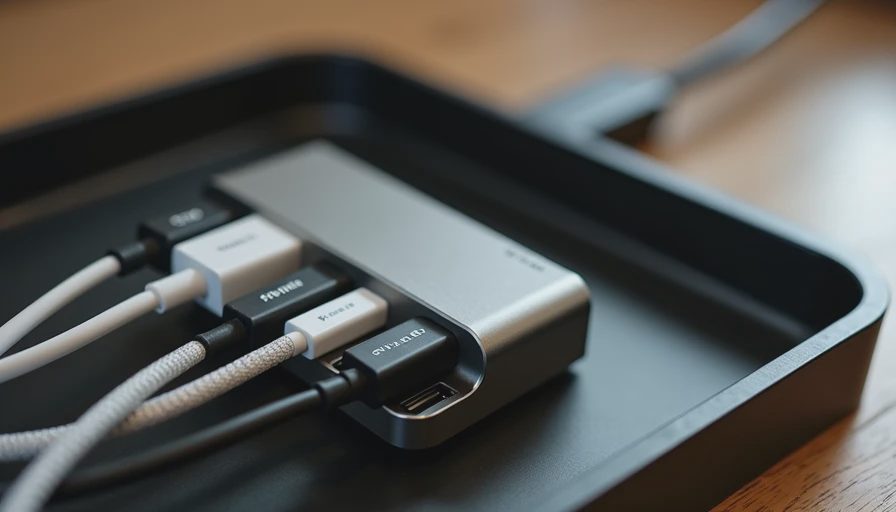
We used a single wide multi-port USB-C charger with enough wattage to top up phones, tablets, and earbuds simultaneously without slow-charging complaints. Each port got a short, high-quality cable permanently attached and labeled with a simple tag: “Aaron tablet,” “Lucy tablet,” “Mom phone,” “Dad phone,” “Earbuds.”
The whole unit sits on a small tray on a kitchen-adjacent shelf—high enough that the dog cannot drag cables onto the floor, low enough that a six-year-old can plug in a tablet without help. A cheap power strip with a visible on/off switch sits underneath so we can cut power at night if we want.
No wireless charging pads. They proved too easy to misalign and too slow for the “I need it in twenty minutes” reality of school mornings. Wired and labeled won.
What Changed After Thirty Days
The first week required reminders. By week three the habit had formed. Devices started living at the station instead of disappearing into rooms. The number of “my tablet is dead” emergencies dropped sharply. We stopped buying replacement cables every other month.
The bigger change was psychological. When every cable has a job and a home, people stop treating them as communal property that can be borrowed and abandoned. The kids learned faster than the adults.
The Small Details That Matter
A few unglamorous choices made the difference:
Short cables (two to three feet) reduce tangling and the temptation to carry them away.
Color-coded or clearly labeled tags beat memory every time.
One central location beats multiple “convenient” mini-stations that recreate the original chaos.
Enough ports to charge everything at once removes the daily negotiation over who gets to plug in.
We also kept one emergency spare cable in a drawer for travel days. Everything else was retired.
What Still Isn’t Perfect
The system is not magic. Guests still bring their own cables and leave them behind. Occasional devices still wander. The station itself needs a quick tidy every couple of weeks. But the baseline level of friction is dramatically lower than the free-for-all we had before.
The Broader Lesson for Family Tech
Most family tech problems are not solved by buying more of the same thing. They are solved by reducing decisions and making the right behavior the easiest behavior. A single well-designed charging station did more for daily peace than any individual premium device we own.
If your house is still fighting the cable wars, start with one location, dedicated cables, and the willingness to remove every competing option. The kids will adapt. The adults might take a little longer.



No letters yet — be the first to write.