The $800 Question Nobody Wants to Ask
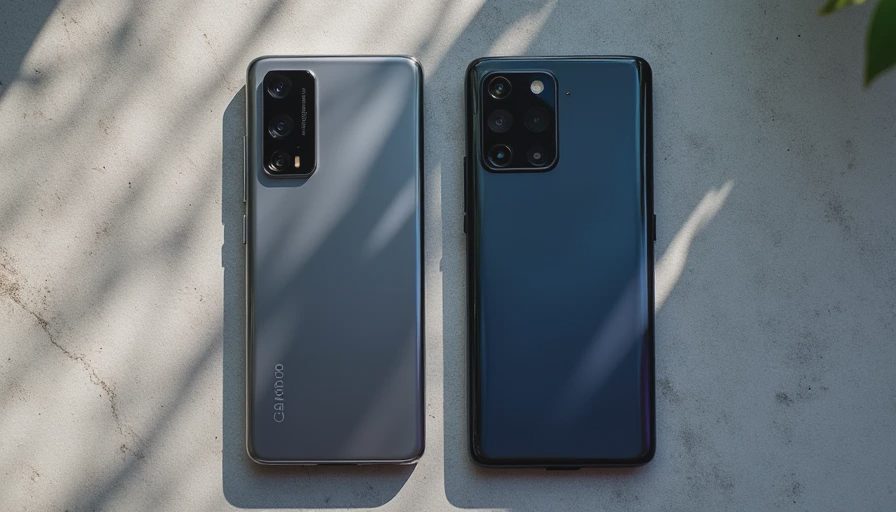
I spent the last month carrying two phones. One cost $1,200. The other cost $400. Both ran the same apps, took the same photos of the same kids, navigated the same trails, and survived the same pocket lint. By day 30 the expensive one still won a few lab-style tests. It no longer won the only test that matters: which phone do I actually reach for when I leave the house.
This is not a “flagships are dead” rage post. Flagships still do certain things better. The problem is that the list of those things has gotten shorter and more specialized while the price gap has stayed wide. For a growing number of people the mid-range phone is no longer the compromise. It is the rational choice.
Spec sheets are free. Truth takes a few weeks.
What the Flagship Still Wins
Credit first. The $1,200 phone has the brighter outdoor display, the more consistent modem in weak signal, the faster sustained charging curve, and the more refined camera processing in difficult light. Build materials feel more premium. Software update promises are longer on paper. If you shoot a lot of low-light video, live in a coverage dead zone, or simply want the most polished object in your pocket, the flagship still delivers.
Those advantages are real. They are also narrower than they were three years ago.
Where the Mid-Range Closed the Gap

Daily app performance is now a non-issue. Scrolling, social media, navigation, video calls, and photo review feel identical in ordinary use. Battery life on the mid-range phone was actually more predictable once both devices settled past the first week. The cheaper phone ran cooler under mixed loads and charged to 80 % fast enough that the flagship’s edge rarely mattered.
Camera results are the biggest shift. The mid-range phone’s computational photography is aggressive and sometimes over-processed, yet the keepers rate in good light is high enough that I stopped caring about the hardware difference for family snapshots and trail photos. Night mode remains the flagship’s clearest win, but even there the gap is smaller than the price difference suggests.
The Friction That Tip the Scale
After thirty days the deciding factors were not peak benchmarks. They were the small daily frictions:
The mid-range phone’s battery meter proved more honest.
It heated less during long navigation sessions.
The simpler camera interface produced usable shots faster.
Losing it or cracking the screen would have hurt less.
The flagship started to feel like an expensive tool I was slightly afraid to use hard. The mid-range phone felt like a tool I could treat like a tool.
Who Still Needs the Flagship
If your work depends on the best possible low-light video, if you need the most reliable modem in rural or congested areas, or if you simply want the most refined hardware and longest software guarantee, the flagship still makes sense. Those are legitimate needs. They are no longer the default needs of most people buying a phone every two or three years.
For everyone else the mid-range argument has become uncomfortable to ignore. You are no longer giving up a lot of daily capability. You are mostly giving up bragging rights and a few edge-case advantages.
The Quiet Shift in the Market
Manufacturers still push the flagship narrative because the margins are better and the launch coverage is easier to win. Review culture still treats the $1,200 phone as the main character and the $400 phone as the understudy. Real usage data from people who carry both is starting to tell a different story.
I will keep testing both ends of the spectrum. The moment the mid-range phones start losing meaningful ground again, I will say so. Right now the opposite is happening. The performance floor has risen so high that the ceiling is becoming a luxury rather than a necessity.
The mid-range phone did not get magically better than the flagship overnight. The flagship simply stopped being better enough to justify the jump for ordinary daily life. That is the argument that has been building for years. Thirty days of side-by-side use made it hard to dismiss.




No letters yet — be the first to write.