If you have ever watched someone’s mouth move a beat before the sound lands, you already know why bluetooth latency matters. It is the delay between the moment your phone sends audio and the moment your earbuds, headphones, or speaker play it back. For music, a little lag usually stays invisible. For games, video calls, and piano apps, it can make an expensive pair of earbuds feel broken. I spent years in a QA lab learning that the spec sheet rarely tells the whole story, so I test bluetooth latency the same way I would test any other problem: repeatably, with a wired reference and a lot of patience.
What bluetooth latency actually means
People throw around “lag” like it is one thing, but bluetooth latency is just timing delay. The sound is not missing; it is late. That delay comes from the phone, the codec, the earbud firmware, the radio link, and sometimes extra processing like noise canceling or gaming modes. A codec is the audio format your phone and earbuds agree to use, and not every codec behaves the same.
For listening to a podcast, 100 milliseconds or so might never bother you. For a rhythm game, that same delay can make every tap feel off. On a movie, it shows up as lip sync drift, where the dialogue trails the actor by just enough to annoy you even if you cannot explain why. That is why bluetooth latency is one of those problems that sounds technical but feels obvious the second you notice it.
How I test it without fooling myself
My bluetooth latency test starts with one source device and one visual reference. I play a click track, a clap, or a lip-sync clip on a phone, then record the screen and the audio path together with a high-frame-rate camera. A wired set of headphones gives me a baseline, because wired playback is close enough to instant for this kind of comparison. Then I switch to wireless and watch how many frames the audio lands behind the visual cue.
I do not trust a single run. I test the same pair several times, with the same device, in the same room, because RF noise, battery level, and firmware quirks can all change the result a little. If a brand says a model is great for gaming, I want to see what happens with the mic on, with noise canceling on, and with multipoint turned on. Multipoint is the feature that connects a headset to two devices at once, and it often adds a little extra delay or instability.
The other thing I look for is consistency. A product that swings from decent to awful is worse than one that is merely average, because inconsistency makes it hard to learn how to use it. If a pair gets faster only when a special low-latency mode is enabled, I note that too. Many people never turn that mode on.
Why the spec sheet can make it look better than it is
This is where manufacturers get cute. They love quoting the codec name as if that alone solves the problem. It does not. AAC, aptX, aptX Adaptive, and LC3 can all be part of a good setup, but the phone matters just as much as the earbuds. Apple devices tend to behave best with AAC. Many Android phones handle aptX Adaptive well. Samsung’s own earbuds often feel most polished inside the Samsung ecosystem. That is not magic; it is tuning.
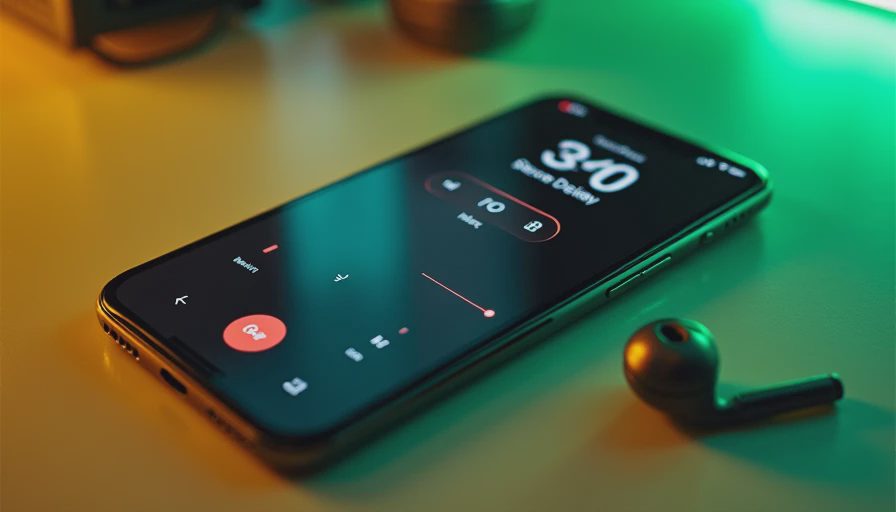
Another trick is measuring only part of the chain. A company might test the audio link and ignore the processing delay added by active noise canceling, voice detection, or video apps. That is how you end up with a product that sounds fine for music but still feels slow in a game. I have seen plenty of devices that look good in a marketing chart and then fail the simple mouth-moves-before-sound test in real use. bluetooth latency is a systems problem, not a single-number problem.
What actually reduces it in real life
If you want better results, start with the boring stuff that works. Use the low-latency or gaming mode if the product has one. Keep firmware updated. Turn off multipoint if you do not need it. If your earbuds let you choose between sound profiles, test the one that drops the most processing and see whether the delay improves. Sometimes the fastest path is the least fancy one.
Hardware choice matters too. For casual music and calls, I care more about comfort, mic quality, and battery life than chasing the absolute lowest delay. For gaming, I will happily tell people to use a wired USB-C headset or a 3.5 mm cable when the device supports it. That is still the cleanest fix. If you insist on wireless, look for products with a strong track record on phones like the iPhone, Pixel, or Galaxy models you actually use, not the one that scored best in a vacuum.
Brands like Sony, Apple, Bose, and Samsung all have their own strengths, but none of them can outrun physics. A well-tuned pair can feel tight and responsive. A poorly tuned pair can make even a great song feel detached.
When bluetooth latency matters enough to care
For most people, it matters most when the screen and the sound have to stay locked together. Video, gaming, workout classes, and instrument practice are the big ones. If you mostly stream Spotify, listen to audiobooks, or take calls while walking the dog, you can usually stop worrying so much and pick the product that fits your ears best. But if you notice lip sync issues on Netflix, hear a delay in a drum pad app, or feel the timing slip in a game, that is your sign to care more.
I also tell readers to separate annoyance from real use. A tiny delay in a room speaker is one thing. A half-second hiccup when you answer a call on a headset is another. That is why bluetooth latency deserves a real test instead of a marketing claim.
The simplest buying rule I use
If a product is mainly for music and calls, do not chase a miracle. Buy for sound, comfort, battery life, and mic quality first. If it is for games or video editing, test the timing or buy wired and move on with your life. That advice saves more money than any spec-sheet number ever will. I tested it. Here is what actually happened: the gear with the best marketing rarely had the best timing, and the products that handled bluetooth latency well were usually the ones that were tuned carefully, not the ones shouting the loudest.
Spec sheets are free. Truth takes a few weeks.

No letters yet — be the first to write.