Consumer electronics testing should answer the question that a glossy launch event avoids: what happens after the excitement wears off? I spent eight years as a quality assurance engineer in Best Buy's corporate lab, and I now test phones, tablets, earbuds, and smartwatches independently. My reviews are built around weeks of use, repeatable measurements, and the small failures that appear after the unboxing video ends.
A device can have a bright display, a large battery, or an impressive camera count and still be frustrating every day. I care about the things that affect a real purchase: whether a phone gets hot during navigation, whether earbuds stay connected in a busy grocery store, and whether a tablet survives being handled by children. Spec sheets are free. Truth takes a few weeks.
Why Consumer Electronics Testing Takes More Than a Day
A first-day review is useful for checking build quality, setup, and basic performance. It is not enough to judge battery aging, software bugs, charging behavior, comfort, or durability. During consumer electronics testing, I keep most devices for at least 30 days and extend promising or problematic products to 90 days.
That longer window changes the questions. Does the battery still last through a workday after repeated charging? Does the hinge loosen? Do wireless earbuds become uncomfortable after two hours? Does a smartwatch continue recording sleep accurately when the band gets sweaty? These are not laboratory curiosities. They determine whether a $300 purchase feels smart or wasteful six months later.
I also avoid treating a single result as absolute truth. Battery life depends on brightness, cellular signal, applications, and temperature. Instead, I repeat the same routine: fixed video playback, timed web browsing, camera use, calls, navigation, and overnight standby. The goal is not a magical number. The goal is a comparison you can trust.
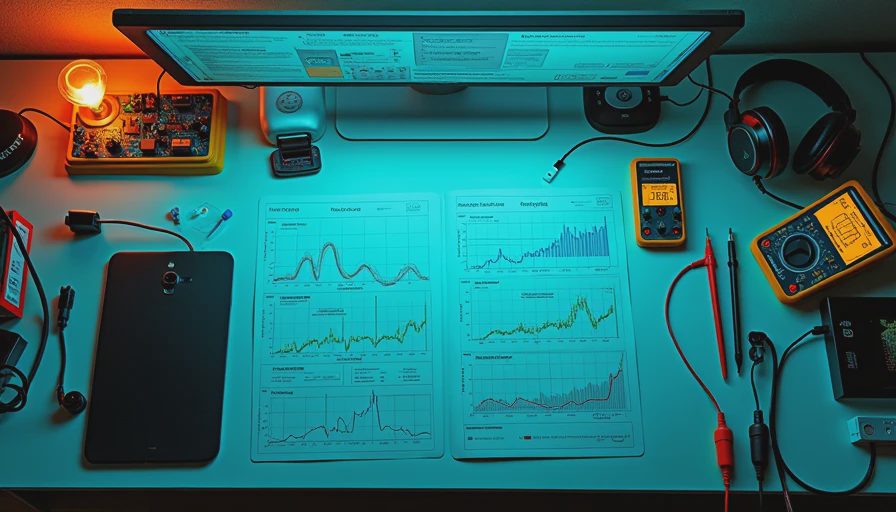
My Repeatable Test Bench
My consumer electronics testing begins with a clean setup. I update the device, install the same core applications, record the starting battery level, and use a calibrated charger whenever possible. I document software versions because a phone running Android in March can behave differently after a major update in May.
For screen testing, I compare readability indoors, outdoors, and at low brightness. A manufacturer may advertise a peak brightness figure that appears only briefly in a narrow mode. I care more about sustained brightness while reading maps in direct sunlight. I also check automatic brightness because a display that constantly overreacts becomes tiring.
For phones and tablets, I measure charging from nearly empty to full and record the first 30 minutes separately. That shows how quickly a device can recover before leaving the house. I test speakers with spoken podcasts, music, and video calls rather than relying only on maximum volume. Distortion at 80 percent volume tells me more than a loudness claim.
Battery, Heat, and Everyday Performance
Battery testing is where consumer electronics testing exposes the difference between marketing and ownership. I run a repeatable mixed-use day that includes email, web pages, video, photographs, Bluetooth audio, and location services. I repeat it under strong and weak cellular signal because a struggling modem can drain a phone surprisingly quickly.
Heat gets its own check. I use a phone for 30 minutes of navigation, then record the temperature near the camera, processor area, and charging port. A warm back panel is normal during heavy work. A hot device that dims the screen, pauses charging, or becomes uncomfortable in a pocket is a design problem.
For tablets, I add a family test. Aaron and Lucy use a device for drawing, educational games, streaming, and video calls while I watch for accidental touches, sluggish menus, and charging interruptions. A tablet that performs beautifully on a desk but drops Wi-Fi when moved two rooms away does not earn a strong recommendation in my house.
Testing Audio and Wearables in Real Conditions
Earbud reviews require more than frequency charts. I test fit while walking, working at a desk, and riding a mountain bike on a safe, controlled route. I compare active noise cancellation, which uses microphones and processing to reduce outside sound, on a busier street and beside ordinary household appliances. The best setting is not always the strongest one; excessive pressure can make listening unpleasant.
I also make calls from indoors and outdoors, including a breezy location. I listen for voice compression, background noise, and dropouts. Bluetooth range gets tested through walls rather than across an empty room. A pair that reaches 100 feet in a showroom may still struggle when a phone sits in a backpack.
Smartwatches receive at least a week of continuous wear. I compare step counts on known walks, heart-rate readings during steady exercise, sleep comfort, notification reliability, and charging frequency. I do not call a sensor accurate because its number looks plausible. I compare repeated readings against a consistent activity and look for patterns, gaps, and obvious errors.
Durability Is a Process, Not a Dramatic Drop Test
Consumer electronics testing does include controlled drops, but a single cinematic impact proves very little. I use repeated low-height drops onto common surfaces, inspect ports and buttons, and check whether the case develops movement or rattles. I never claim that a product is indestructible. Glass can crack, seals can fail, and repairs can cost enough to change the buying decision.
Daily wear matters just as much. I examine charging contacts after repeated use, hinge movement on foldable products, earbud case scratches, and watch-band irritation. I test cables by bending them near the connector, where failures commonly begin. For family devices, I include realistic handling such as being placed in a backpack, used with damp hands, and carried between rooms.
A rugged rating can be helpful, but it has limits. Water resistance is not the same as waterproofing, and an impact rating does not guarantee protection for the screen. I explain what a claim means, what it does not mean, and whether a $20 case provides more practical protection than paying for a premium materials upgrade.
How My Reviews Help You Spend Smarter
Good consumer electronics testing should end with a buying decision, not a pile of numbers. I compare results with similarly priced products, identify the compromises, and explain who should skip the device. A $799 phone with excellent cameras may still be a poor choice for someone who values compact size and reliable battery life. A $250 tablet with a modest processor may be ideal for streaming, reading, and homework.
I also revisit products after the launch conversation fades. Software updates, accessory prices, battery behavior, and long-term comfort can change the recommendation. If a device fails a basic promise, I say so plainly. If it succeeds in a narrow way, I describe that too rather than handing it a generic award.
Before buying, read the test details, not just the final score. Look for the conditions behind battery numbers, the length of the comfort test, and whether the reviewer used the product beyond the first week. That is the purpose of this site: fewer impulse purchases, fewer disappointing returns, and clearer advice before you spend $300 to $1,200.
What to Expect From This Blog
My consumer electronics testing is independent, practical, and deliberately slower than launch-day coverage. I do not accept manufacturer sponsorships, and I do not turn a specification sheet into a review. I use the product at my desk, on errands, during workouts, and around a busy home before reaching a conclusion.
Some devices will earn an enthusiastic recommendation. Others will expose weak batteries, uncomfortable designs, unreliable software, or marketing that does not survive ordinary use. I tested it. Here's what actually happened. That standard takes time, but it gives you something more useful than hype: a realistic idea of how the device will behave after the box is gone.




No letters yet — be the first to write.